
Oklahoma Residents Directory
Oklahoma keeps a wide range of public records that help you find people and look up residents across the state. The Oklahoma residents directory pulls from court files, property records, vital records, and law enforcement data held by agencies in all 77 counties. You can search many of these records for free through state databases like OSCN and the OSBI portal. County clerks, court clerks, and city clerks each hold different types of files. This guide walks you through the best ways to search the Oklahoma residents directory, what records are out there, and how to get copies from the right office.
Oklahoma Public Records Overview
Oklahoma Residents Directory and the Open Records Act
The Oklahoma Open Records Act makes most government files available to anyone. You do not need to give a reason for your request. The law is in Title 51, Section 24A.5 of the Oklahoma Statutes, and it says all records of public bodies shall be open to any person for inspection, copying, or mechanical reproduction during regular business hours. That rule applies to court records, property files, arrest logs, and most other documents held by state and county offices.
Fees are low. Standard copies cost $0.25 per page for documents up to legal size. Certified copies run $1.00 per page. These fee caps come straight from the statute. No office can charge more than that for basic copies, though some charge search fees for requests that take a lot of staff time.
Some records are off limits. Social security numbers, bank account numbers, and driver's license numbers stay private. Medical records, school records, and files tied to open investigations are also kept out of reach. Juvenile cases and adoption files are sealed by law. But the vast bulk of what government agencies hold in Oklahoma is fair game for the public to see and copy.
Oklahoma holds over 35 million public records. These include criminal records, court records, and vital records. You can search many of them through OSCN and the OSBI CHIRP portal. Under the Open Records Act, public records may exist in different forms like paper, microfilm, computer tape, or digital files. The law covers all of them.
Search Oklahoma Residents Directory Through OSCN
The Oklahoma State Courts Network is the best free tool for looking up people in the court system. OSCN holds over 15 million cases going back to the 1990s. It covers all 77 counties plus appellate courts. You can search by name or case number any time of day, and there is no fee to use it.
What makes OSCN stand out is the depth of what it shows. You get party names, docket entries, case status, hearing dates, and in many cases the actual filed documents. Civil lawsuits, criminal cases, traffic citations, probate matters, and family court dockets are all in there. The system gets real-time updates from courthouses across the state, so the data stays current.
To search OSCN for a person, go to the docket search page. Enter the last name and first name. You can pick a specific county or search all courts at once. Use the case type filter to narrow things down. Case type codes help too.
- CJ for civil cases
- CF for criminal felony
- CM for criminal misdemeanor
- FD for family and divorce
- PB for probate
- TR for traffic
- SC for small claims
A few types of records have limits on OSCN. Juvenile records show up with restricted access. Sealed and expunged cases do not appear at all. Municipal court cases from most cities are not on OSCN either. For those, you need to call the city court clerk directly. There can be a 24 to 72 hour delay before new filings show up, but most records post fast.
The Oklahoma residents directory search through OSCN is one of the most open court record systems in the country. Most states charge fees or limit what you can see online. Oklahoma gives it all away for free.
The OSCN portal provides access to case records from every county in Oklahoma. You can view the search page at www-oscn.us.
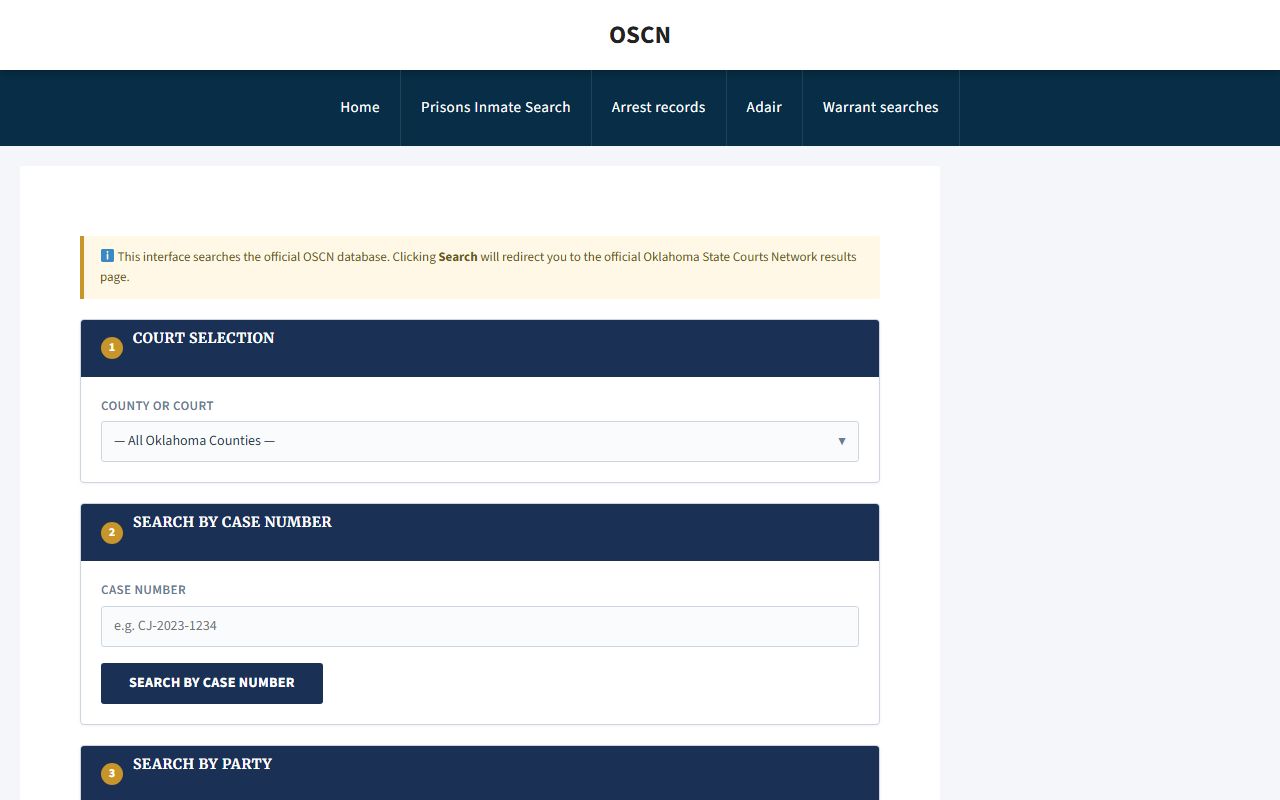
This is the main entry point for searching court-related records in the Oklahoma residents directory. The site runs 24 hours a day and requires no account to use.
Criminal History in the Oklahoma Residents Directory
Criminal records are a big part of the Oklahoma residents directory. The OSBI Criminal History Information Request Portal (CHIRP) is the official way to request a criminal history search. You create a free account, submit a search, and get results through your account. Name-based searches cost $15. Fingerprint searches cost $19 for Oklahoma records only, or $41 if you add FBI records.
Under OAC 375:9-1-2, you need to provide the full name and date of birth of the person you are checking. Social security number helps if you have it. The sex offender registry check is $2 and the violent offender check is also $2. Personal checks are not accepted for any OSBI services. CHIRP results stay in your account for 60 days before they are removed.
The Oklahoma Department of Corrections runs a separate search tool. The Offender Lookup lets you find people in state prisons. It shows the person's name, DOC ID, mugshot, facility, charges, sentence details, and expected release date. This only covers state prison inmates. If someone is in a county jail, you need to check with that county's sheriff.
The screenshot below shows the OSBI CHIRP portal where you can request criminal records.
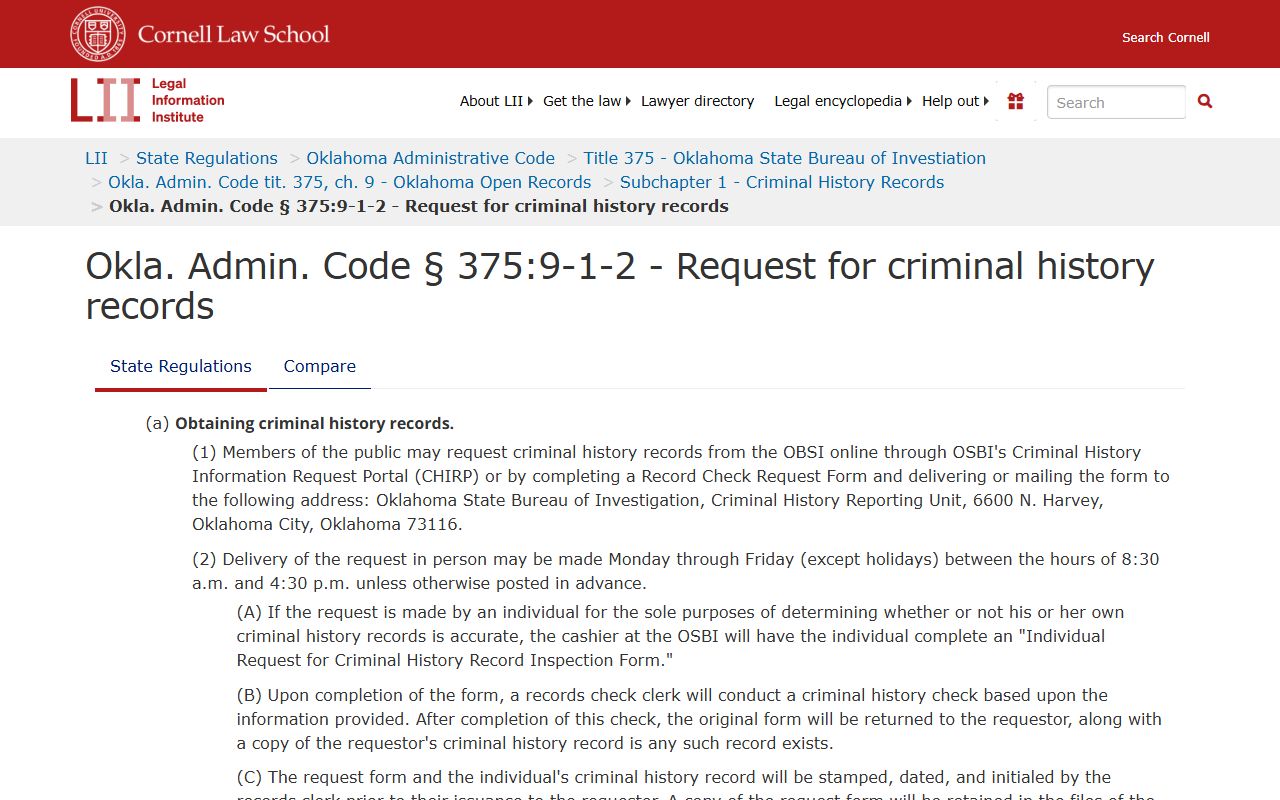
CHIRP processes searches during business hours, Monday through Friday, 8:30 a.m. to 4:30 p.m.
Law Enforcement Records in Oklahoma
Under 51 O.S. Section 24A.8, law enforcement agencies must make certain records available. This includes the name, date of birth, address, and physical description of anyone arrested. It also covers the facts of the arrest, the arresting officer's name, and a chronological list of incidents showing the offense, date, time, and a brief summary of what happened.
Jail registers are public too. They show each person booked into custody, the date and cause of commitment, who ordered the commitment, a description of the person, and the date they were released or if they escaped. Warrant dispositions, radio logs, crime summaries, and conviction records are all part of what agencies have to share under this section of the law.
The Oklahoma County Detention Center puts some of this out on its own. It has an inmate search tool, a daily blotter report, and a warrants and bonds section. You can also submit open records requests by email at records@okcountydc.net under 51 O.S. Section 24A.1.

The detention center site also has a C.A.R.E. Unit that helps family members of people in custody.
Oklahoma Residents Directory Inmate Search
Oklahoma has several ways to look up people who are in jail or prison. For state inmates, use the DOC Offender Lookup. Type in a name or ODOC number and the system pulls up mugshots, facility info, charge details, and custody level. If you can not find someone there, they may be in a county jail instead of a state prison.
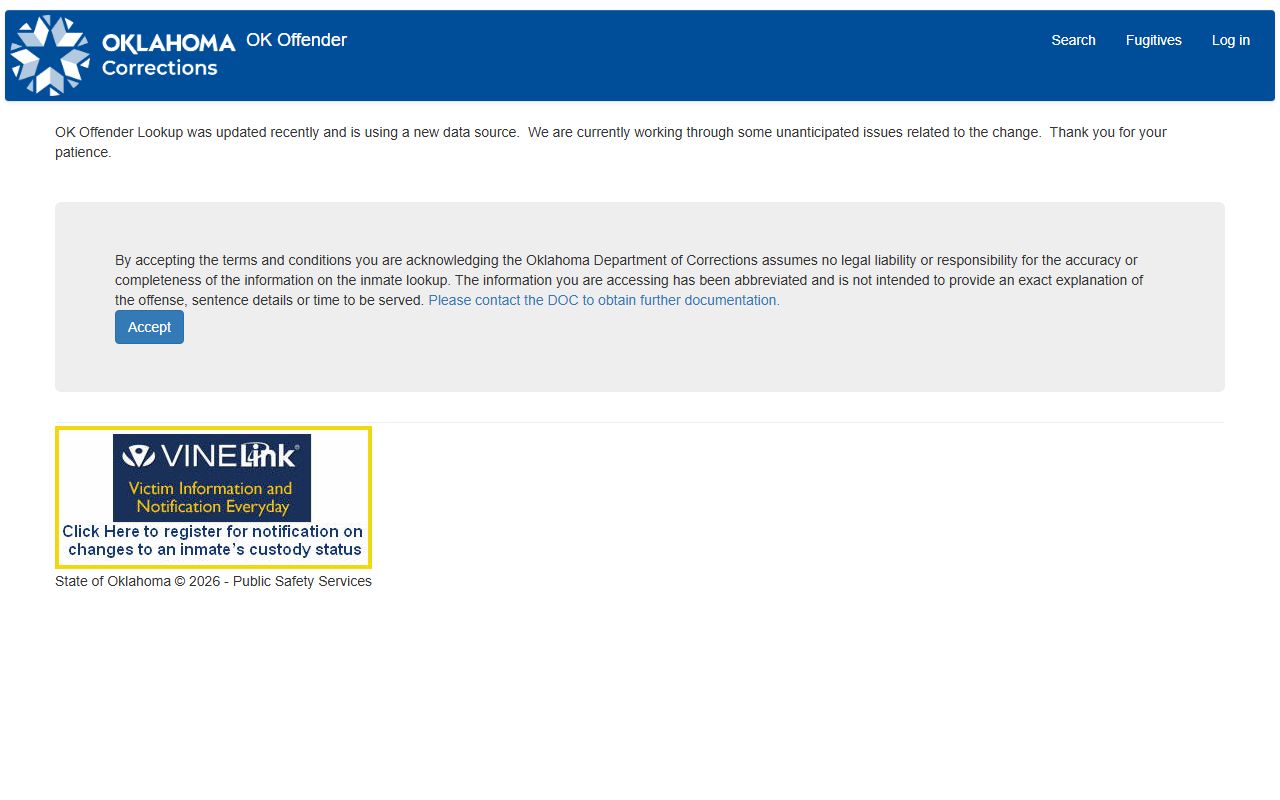
The DOC manages over 24 state prisons across Oklahoma, including community correction centers and private facilities.
County jails run their own searches. Most sheriff offices post an online inmate roster. You can search by name and see booking photos, charges, and bond amounts. Each county handles it a bit differently. Some update daily. Others run a few days behind. The quickest way to check is to call the sheriff's office in the county where the arrest happened.
The Oklahoma State Agency Databases guide lists every searchable public database run by state agencies. Under the crime section, you can find links to the sex offender registry, violent offender search, meth registry, and more. Each one lets you search by name, address, county, or other filters.
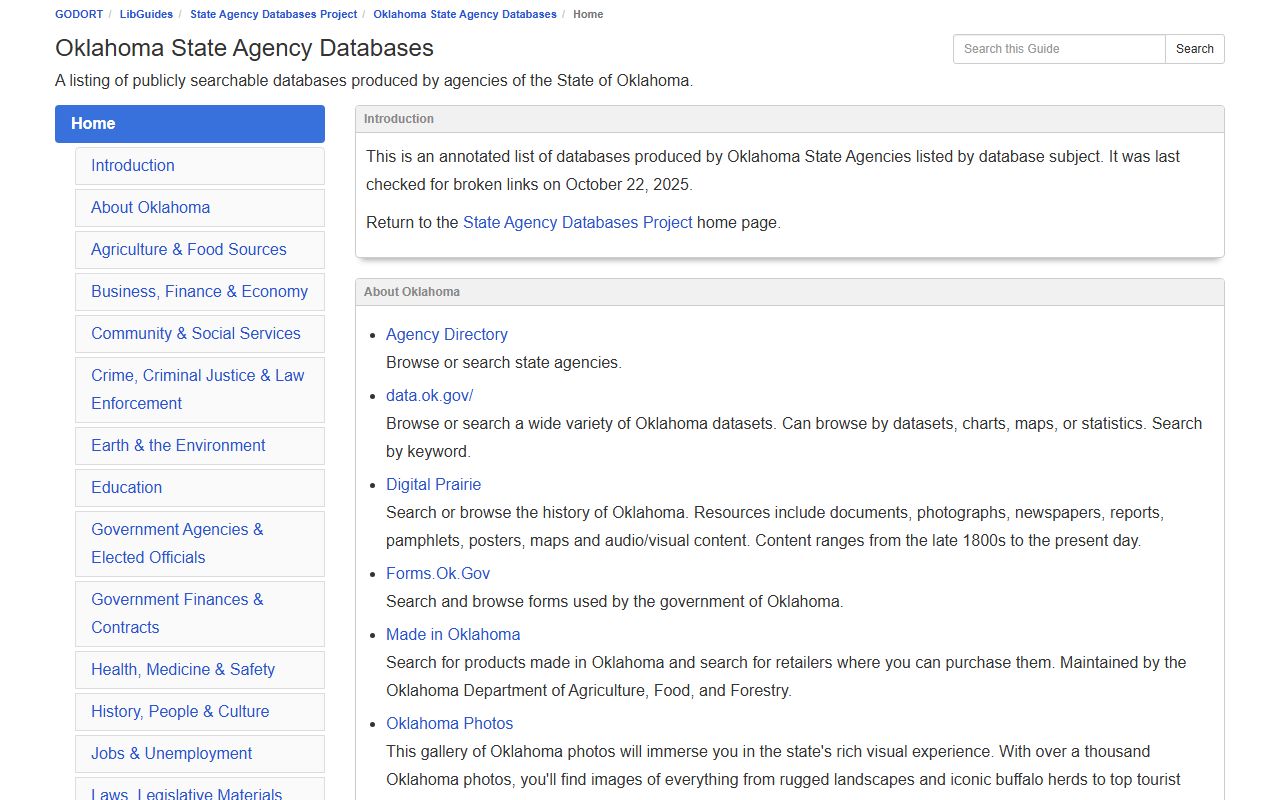
This guide is hosted by the Government Documents Round Table and covers databases from dozens of Oklahoma agencies.
Property and Public Records in Oklahoma
Property records are another key part of the Oklahoma residents directory. County clerks maintain deeds, mortgages, liens, and other land records. Many counties offer free online search tools on their official county websites. You can look up who owns a property, when it last sold, and what documents are on file.
The Oklahoma Open Records Act covers property files just like court files. You can walk into any county clerk's office during business hours and ask to see recorded documents. The three main ways to find public records in Oklahoma are in person at the government office, by mail with your request and fees, or online through agency websites. More and more counties put their records on the web each year.
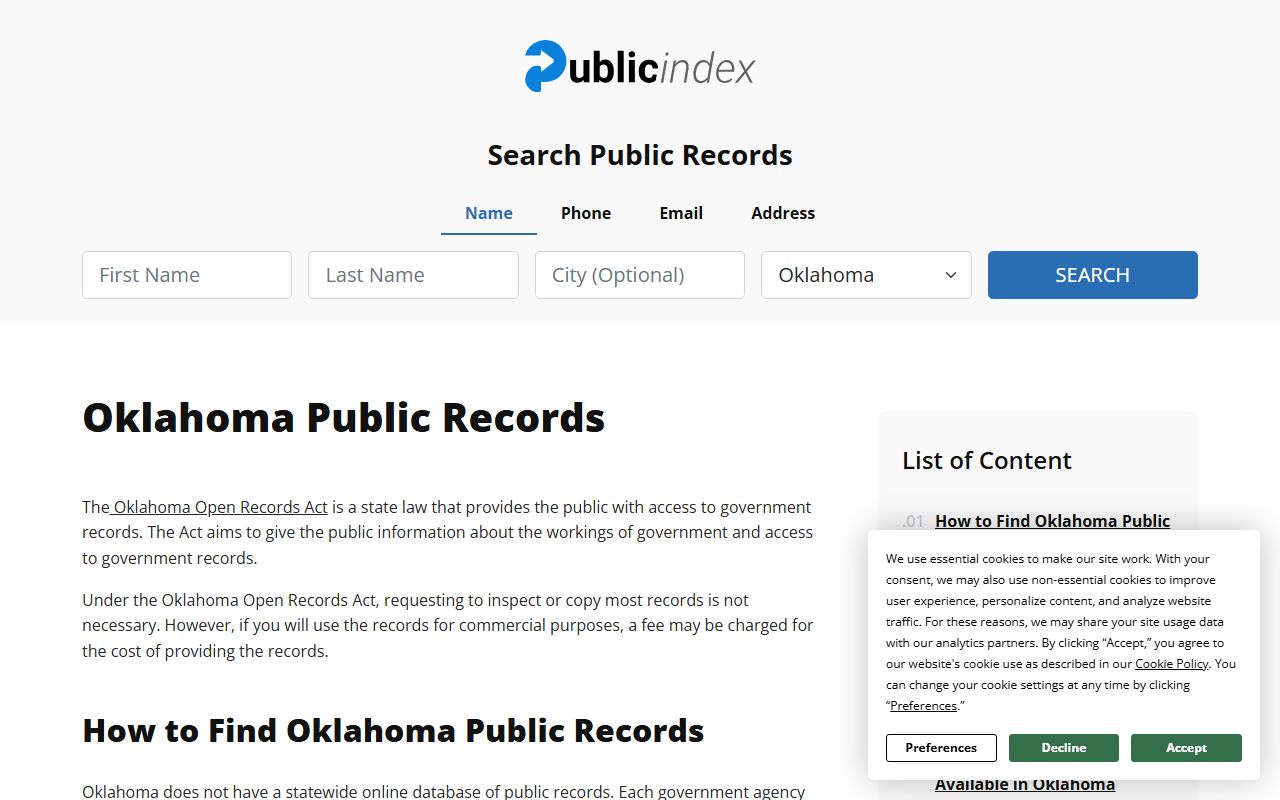
The state records portal covers criminal records, court records, vital records, and property records across all 77 Oklahoma counties.
Vital records like birth and death certificates go through the Oklahoma State Department of Health. Marriage and divorce records are kept by the court clerk in the county where the event took place. Some of these records have restricted access. Birth certificates, for example, are only available to the person named, their parents, or someone with a court order. But marriage records and most divorce files are open to the public.
How the Oklahoma Residents Directory Works
Three types of clerks handle most public records in Oklahoma. The county clerk keeps land records, deeds, mortgages, marriage licenses, and military discharge papers. The court clerk maintains all judicial files for civil, criminal, family, and probate cases. The city clerk holds municipal records like council minutes, permits, and local licenses. Knowing which clerk to contact saves you a lot of time.
Under 51 O.S. Section 24A.5, you can inspect or copy records during regular business hours. If part of a record is exempt, the office has to give you the rest after removing the exempt parts. They can not refuse the whole thing just because one piece is protected. The law also says any public official who willfully violates the Open Records Act faces a fine up to $500 or up to one year in jail, or both. That penalty is in Section 24A.17.
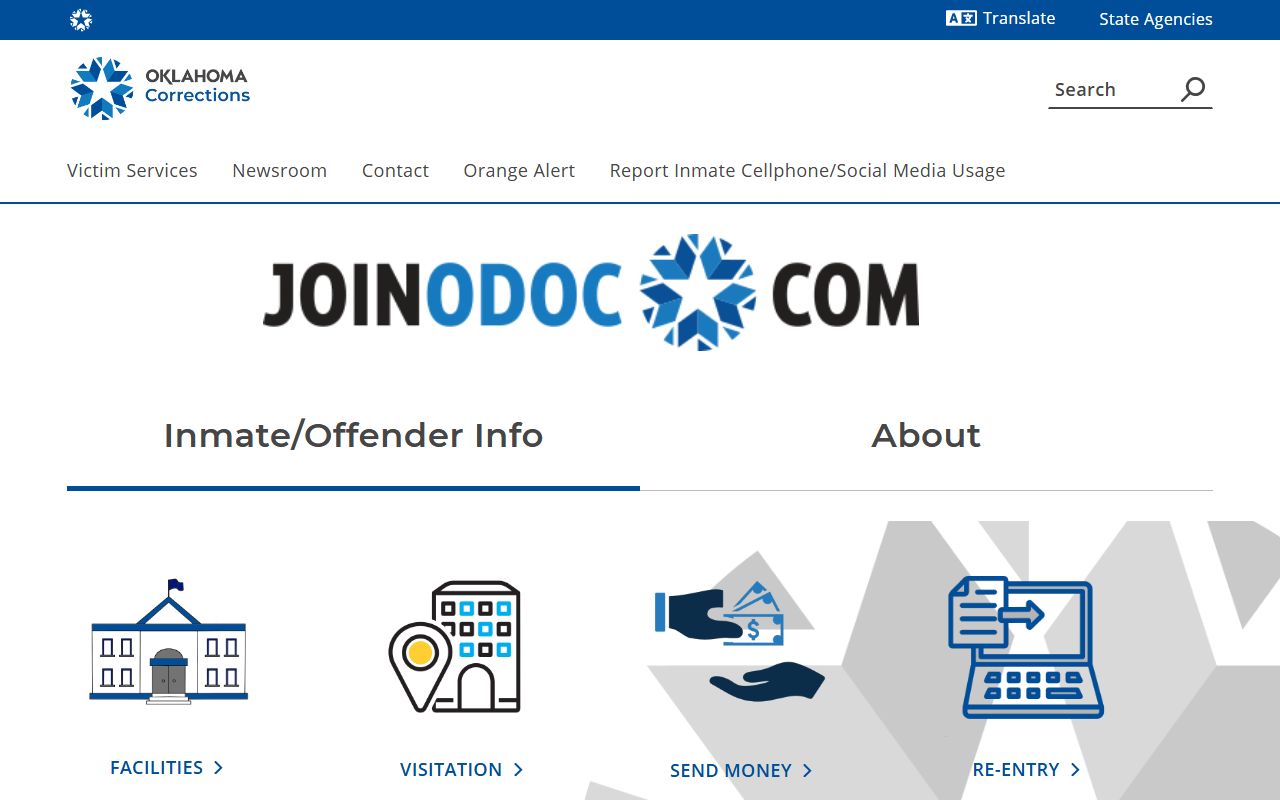
The Oklahoma Department of Corrections main portal at oklahoma.gov/doc.html provides access to offender data and facility information.
For the most complete search, start with OSCN for court records, then check the county clerk site for property files, and use CHIRP for criminal history. Each tool covers a different slice of the Oklahoma residents directory. Together they give you a full picture of what public records exist for a person.
Fees for Oklahoma Residents Directory Searches
Most online searches are free. OSCN costs nothing. The DOC offender lookup is free. County inmate rosters are free. You only start paying when you need copies or formal criminal history searches.
Here is what to expect for common requests across the state:
- Standard document copies: $0.25 per page
- Certified copies: $1.00 per page
- OSBI name search: $15.00
- OSBI fingerprint search (state only): $19.00
- OSBI fingerprint search (state and FBI): $41.00
- Sex offender registry check: $2.00
- Violent offender registry check: $2.00
Some offices charge search fees for complex requests. The City of Norman, for example, charges $25.00 per hour for IT department searches and $35.00 per hour for legal department review. Prepayment is required when the estimate goes over $10.00. Other cities have similar policies. Always call ahead and ask before you submit a request.
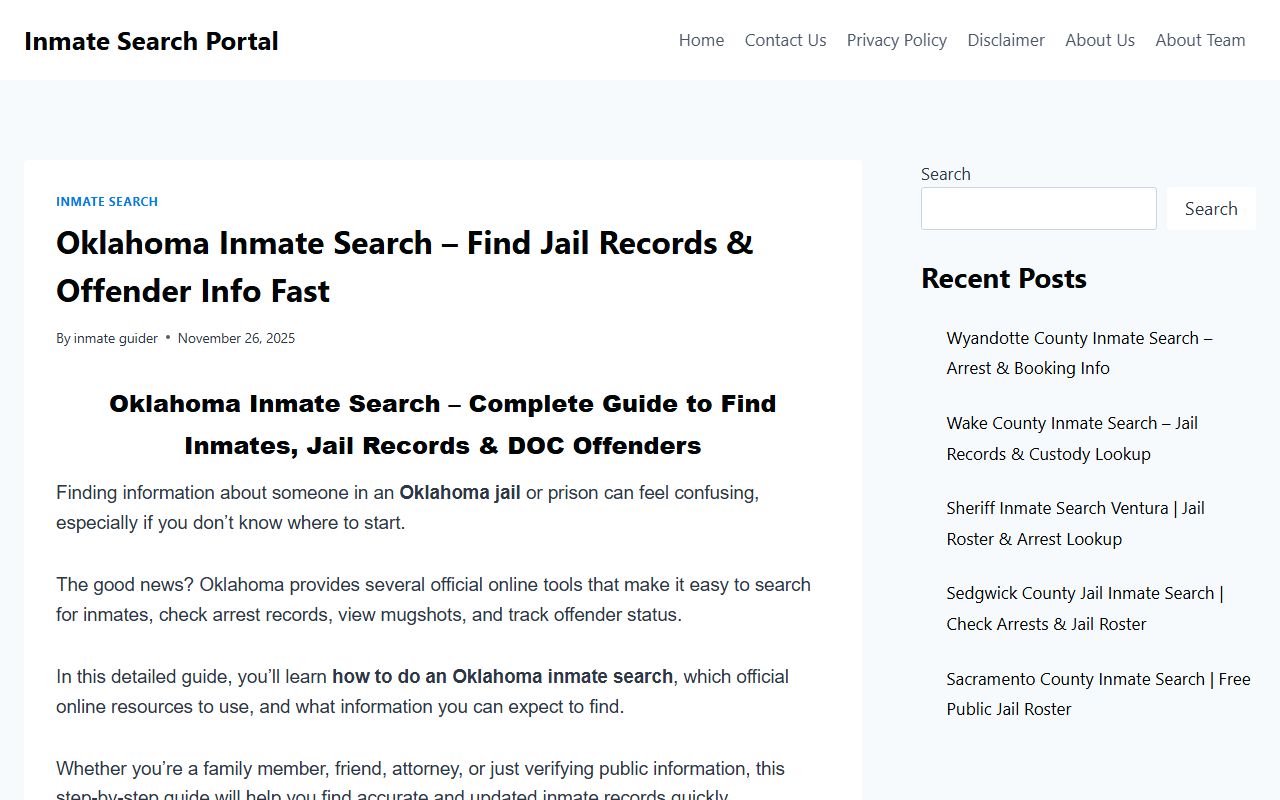
Multiple search tools exist for finding inmate and arrest records across the Oklahoma residents directory.
Browse Oklahoma Residents Directory by County
Each of Oklahoma's 77 counties has its own set of offices that hold public records. Pick a county below to find local contact info, search tools, and resources for looking up residents in that area.
Oklahoma Residents Directory by City
Major cities across Oklahoma file records at the county level, but many also have city clerk offices with their own public files. Pick a city below to find local resources.